
Science
Alberta Bans Wild Boars to Combat Ecological Threats

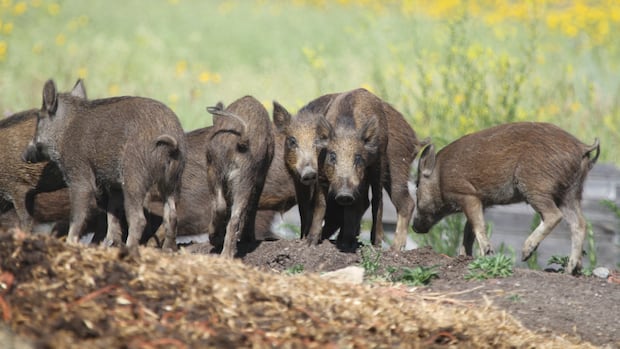
The Alberta government has declared wild boars “a pest in all circumstances,” effective December 1, 2023. This new classification imposes significant restrictions on the captivity and hunting of these animals in the province. It is now illegal to keep, buy, sell, obtain, or transport wild boars without a permit, effectively barring the establishment of new wild boar farms in Alberta. Additionally, hunting and trapping of wild boars is prohibited, except for landowners or occupants who may kill the animals on their own property.
Individuals who kill a wild boar are required to report details such as the date, location, and number of animals killed to the provincial authorities promptly. These regulations aim to address the growing concerns surrounding the ecological and agricultural damage caused by existing wild boar populations, as well as the potential spread of foreign animal diseases.
Ecological and Economic Risks of Wild Boars
According to Hannah McKenzie, Alberta’s wild boar specialist, the decision to implement these restrictions stems from the dangers posed by current wild boar populations. She noted that wild boars not only damage agriculture and the environment but also pose a serious risk for the introduction and spread of diseases like African swine fever and foot-and-mouth disease. McKenzie emphasized that an outbreak could have a devastating financial impact on both the pork and larger livestock industries in Alberta, as well as on trade relationships.
Wild boars, which include the Eurasian wild pig and hybrids with domestic swine, were initially introduced to the Prairies in the late 20th century for livestock purposes. Over time, some escaped and established feral populations across Canada, predominantly in the Prairie provinces. As their numbers grow, other regions have begun to adopt stricter wild boar management strategies to mitigate disease and trade risks.
In Ontario, a similar situation has led to a provincial ban on certain types of wild boars, with producers like Hans Lindenmann expressing uncertainty about their future, as these animals constituted half of his business.
Management Strategies and Financial Support for Producers
The Alberta government is currently working with twelve wild boar farms, which may have the option to either keep their animals under stricter conditions or accept compensation to exit the industry. Producers can receive up to $590 per boar and additional compensation for fencing, with the program estimated to cost about $2.6 million. This initiative is part of the government’s broader $3 million budget allocation for wild boar management this year.
“Wild boar producers are also producers for Alberta Pork, too, so it’s a difficult position to be in,”
said Charlotte Shipp, Alberta Pork’s industry programs manager. She acknowledged that while the new regulations can be challenging, they are necessary to prevent the potential spread of African swine fever and ensure that wild boar producers remain viable members of rural communities.
The threat posed by African swine fever, which can devastate pig populations, has become increasingly significant as outbreaks have been reported in other countries. Just last week, Spain, one of the European Union’s largest pork producers, confirmed an outbreak among wild boar populations.
Despite the restrictions, McKenzie stated that tracking the exact number of wild boars in Alberta remains a challenge. Traditional methods like aerial surveys are often ineffective due to the boars’ nocturnal habits and preference for densely forested areas.
“They’re really incredibly destructive,”
said Ryan Brook, a professor at the University of Saskatchewan who studies invasive wild boars. He highlighted that wild boars cause significant ecological damage by uprooting the ground, a behavior known as rooting.
Brook has long advocated for stricter regulations on wild boar management, arguing that banning sport hunting—a practice he has been calling for over 15 years—is a necessary step. While this may seem counterintuitive given the province’s goal of eradicating the species, Brook explained that hunting has not been effective in reducing wild boar populations. The animals reproduce frequently, with an average of two litters of six piglets each year, making it difficult for hunting alone to control their numbers.
As Alberta implements these new restrictions, the impact on both the environment and the agricultural sector will be closely monitored. The province’s approach reflects a growing recognition of the challenges posed by invasive species and the need for coordinated management strategies to protect local ecosystems and industries.

Winter Nail Trends Revealed by Celebrity Artist Zola Ganzorigt

Alberta Bans Wild Boars to Combat Ecological Threats

Shortage of Ob-Gyns Forces Labor Diversions at Local Hospitals

Innovative Soft Exoskeleton Developed for Young Farmers’ Posture

Conservatives Push for Vote on Controversial Pipeline Agreement

Camosun College Welcomes Richard Stride as New Provost

Festive Holiday House Tea Enlivens Ermatinger Clergue Site

Alberta Implements Tough Restrictions on Wild Boar Management

Lake County Health Department Seeks Instructors for Mental Health Training

Samsung Offers Up to $5,000 Off During Last Chance Cyber Week Sale

Brandon University’s Failed $5 Million Project Sparks Oversight Review

Microsoft Confirms U.S. Law Overrules Canadian Data Sovereignty

Winnipeg Celebrates Culinary Creativity During Le Burger Week 2025

Montreal’s Groupe Marcelle Leads Canadian Cosmetic Industry Growth

Tech Innovator Amandipp Singh Transforms Hiring for Disabled

Dragon Ball: Sparking! Zero Launching on Switch and Switch 2 This November

Red River College Launches New Programs to Address Industry Needs

Google Pixel 10 Pro Fold Specs Unveiled Ahead of Launch

Rocket Lab Reports Strong Q2 2025 Revenue Growth and Future Plans

Discord Faces Serious Security Breach Affecting Millions
-
 Education3 months ago
Brandon University’s Failed $5 Million Project Sparks Oversight Review
-
 Science4 months ago
Microsoft Confirms U.S. Law Overrules Canadian Data Sovereignty
-
 Lifestyle3 months ago
Winnipeg Celebrates Culinary Creativity During Le Burger Week 2025
-
 Health4 months ago
Montreal’s Groupe Marcelle Leads Canadian Cosmetic Industry Growth
-
 Science4 months ago
Tech Innovator Amandipp Singh Transforms Hiring for Disabled
-
 Technology4 months ago
Dragon Ball: Sparking! Zero Launching on Switch and Switch 2 This November
-
 Education4 months ago
Red River College Launches New Programs to Address Industry Needs
-
 Technology4 months ago
Google Pixel 10 Pro Fold Specs Unveiled Ahead of Launch
-
 Business3 months ago
Rocket Lab Reports Strong Q2 2025 Revenue Growth and Future Plans
-
 Technology2 months ago
Discord Faces Serious Security Breach Affecting Millions
-

 Education4 months ago
Alberta Teachers’ Strike: Potential Impacts on Students and Families
-

 Science4 months ago
China’s Wukong Spacesuit Sets New Standard for AI in Space
-

 Education3 months ago
New SĆIȺNEW̱ SṮEȽIṮḴEȽ Elementary Opens in Langford for 2025/2026 Year
-

 Technology4 months ago
World of Warcraft Players Buzz Over 19-Quest Bee Challenge
-

 Business4 months ago
New Estimates Reveal ChatGPT-5 Energy Use Could Soar
-

 Business4 months ago
Dawson City Residents Rally Around Buy Canadian Movement
-

 Business4 months ago
BNA Brewing to Open New Bowling Alley in Downtown Penticton
-

 Technology2 months ago
Huawei MatePad 12X Redefines Tablet Experience for Professionals
-

 Technology4 months ago
Future Entertainment Launches DDoD with Gameplay Trailer Showcase
-

 Technology4 months ago
Global Launch of Ragnarok M: Classic Set for September 3, 2025
-

 Technology4 months ago
Innovative 140W GaN Travel Adapter Combines Power and Convenience
-

 Top Stories3 months ago
Blue Jays Shift José Berríos to Bullpen Ahead of Playoffs
-

 Science4 months ago
Xi Labs Innovates with New AI Operating System Set for 2025 Launch
-

 Technology4 months ago
New IDR01 Smart Ring Offers Advanced Sports Tracking for $169