
Business
Logging Roads Drive Ontario’s Forestry Sector and Economy

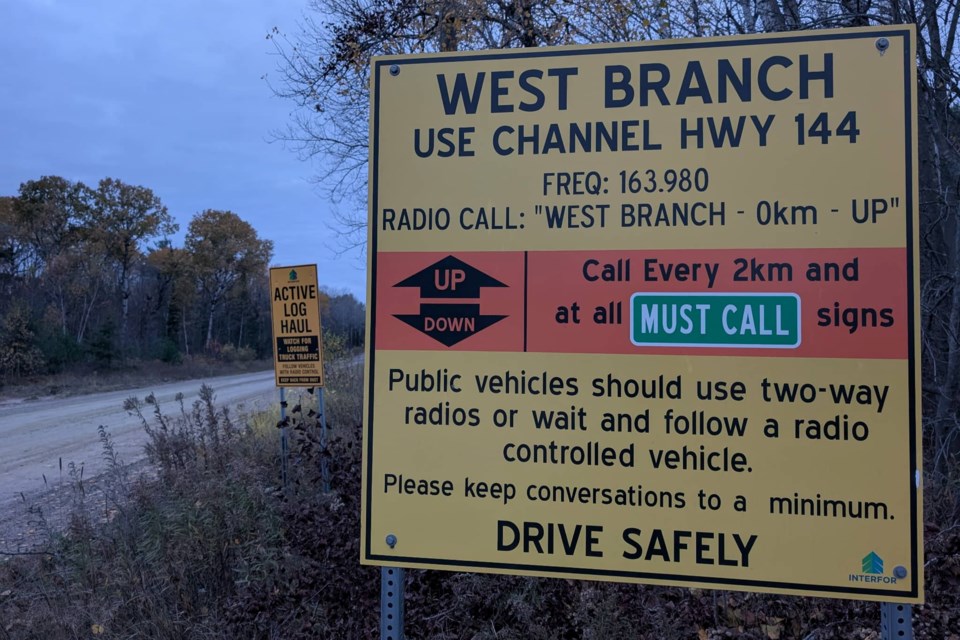
Logging roads in Ontario play a crucial role in supporting the province’s forestry sector and the communities dependent on it. These roads, often taken for granted, are essential for transporting timber and connecting rural areas to larger markets. In 2023, the forest industry contributed $5.4 billion to Ontario’s Gross Domestic Product (GDP) and generated a total revenue of $21.6 billion. With approximately 128,000 jobs supported in Indigenous, rural, and northern communities, the significance of logging roads cannot be overstated.
Catherine Fife, Member of Provincial Parliament (MPP) for Waterloo and Shadow Minister for Economic Development, Jobs Creation and Trade, emphasized this point by stating, “Ontario’s forestry sector is vital to the provincial economy, providing thousands of jobs directly, supplying the lumber that builds our homes, and supporting construction and manufacturing jobs.” She highlighted the need for tariff relief and investment in modernization to keep Ontario lumber in Ontario homes, underscoring the importance of infrastructure such as logging roads.
The Ontario Forest Industries Association (OFIA) represents the interests of the province’s forest products sector. According to Adrian Smith, OFIA Policy Advisor, these roads are more than just pathways for the forestry sector. “Forest access roads, often called ‘logging roads,’ serve far more than the forestry sector. Built and maintained by our sector, they provide vital infrastructure for all Ontarians.” Each year, forestry companies invest millions of dollars in maintaining this extensive network to ensure its reliability.
These roads are instrumental in transporting logs from forests to pulp and sawmills, as they allow for efficient travel. Smith noted that transport costs significantly impact the sector’s viability, making the maintenance of logging roads essential. According to data from the Ontario government, the Provincial Forest Access Roads Funding Program supports the maintenance of over 19,300 kilometres of forest access roads annually and has provided over $1 billion in funding since its inception.
Management of these roads falls to holders of Sustainable Forest Licences (SFL) and Forest Resource Licences (FRL). These licensees are responsible for the construction, maintenance, and monitoring of forest roads as detailed in their approved forest management plans. The Crown Forest Sustainability Act mandates that a Forest Management Plan (FMP) be prepared for any Crown forest operation, ensuring that maintenance standards are met for roads used to access harvest blocks.
Logging roads can be classified into primary, branch, and operational roads. Primary roads provide principal access to management units and are generally permanent. Branch roads extend from primary roads and facilitate access between geographic areas of harvest operations. Operational roads provide temporary access and are typically not maintained after their use, reinforcing the need for a structured approach to road management.
Examples of significant industrial roads in Northern Ontario include the Sultan Industrial Road and the Caramat Industrial Road. The Sultan Industrial Road connects pivotal highways, providing easier access for transportation. Such infrastructure is vital not only for the forestry sector but also for tourism, recreation, and other economic activities.
Local communities rely on logging roads for various purposes, from recreational activities like hunting and fishing to essential services such as emergency responses. Scott McPherson, formerly General Manager of Nipissing Forest, highlighted the roads’ multifaceted importance, stating, “Forest access roads are important to the industries that build and maintain them because they provide the essential arteries to move wood to mills and workers and machinery to work sites.”
As climate change poses new challenges, maintaining these roads becomes increasingly vital. With potential increases in fire and insect infestations, access to remote areas for monitoring and intervention is critical. George Graham, a forestry expert, pointed out that “our way of life in the north…depends in large measure on roads.” He emphasized that logging roads are essential for accessing timber resources, fire protection, and ecological management.
The maintenance costs for these roads can be significant, with primary roads costing between $35,000 and $50,000 per kilometre and branch roads ranging from $12,000 to $20,000 per kilometre. Despite these costs, the investment is necessary for supporting both the forestry industry and the communities that depend on these networks.
Public access to logging roads is generally permitted, provided the roads are not marked as restricted due to ongoing resource extraction activities. John McNutt, Woodlands Manager for Goulard Lumber, stated, “The public should know that they can use any road on Crown land that is not signed as restricted…Forest Access Roads are available for their use on a use-at-your-own-risk basis.”
The intricate network of logging roads in Ontario embodies a blend of natural beauty and economic necessity. As the province navigates the future of its forestry sector, the role of these roads will continue to shape the landscape, facilitate economic growth, and provide access to the vast resources of the Crown land. The preservation and maintenance of this vital infrastructure will not only support the industry but also sustain the communities that thrive in Ontario’s northern regions.

Winter Nail Trends Revealed by Celebrity Artist Zola Ganzorigt

Alberta Bans Wild Boars to Combat Ecological Threats

Shortage of Ob-Gyns Forces Labor Diversions at Local Hospitals

Innovative Soft Exoskeleton Developed for Young Farmers’ Posture

Conservatives Push for Vote on Controversial Pipeline Agreement

Camosun College Welcomes Richard Stride as New Provost

Festive Holiday House Tea Enlivens Ermatinger Clergue Site

Alberta Implements Tough Restrictions on Wild Boar Management

Lake County Health Department Seeks Instructors for Mental Health Training

Samsung Offers Up to $5,000 Off During Last Chance Cyber Week Sale

Brandon University’s Failed $5 Million Project Sparks Oversight Review

Microsoft Confirms U.S. Law Overrules Canadian Data Sovereignty

Winnipeg Celebrates Culinary Creativity During Le Burger Week 2025

Montreal’s Groupe Marcelle Leads Canadian Cosmetic Industry Growth

Tech Innovator Amandipp Singh Transforms Hiring for Disabled

Dragon Ball: Sparking! Zero Launching on Switch and Switch 2 This November

Red River College Launches New Programs to Address Industry Needs

Google Pixel 10 Pro Fold Specs Unveiled Ahead of Launch

Rocket Lab Reports Strong Q2 2025 Revenue Growth and Future Plans

Discord Faces Serious Security Breach Affecting Millions
-
 Education3 months ago
Brandon University’s Failed $5 Million Project Sparks Oversight Review
-
 Science4 months ago
Microsoft Confirms U.S. Law Overrules Canadian Data Sovereignty
-
 Lifestyle3 months ago
Winnipeg Celebrates Culinary Creativity During Le Burger Week 2025
-
 Health4 months ago
Montreal’s Groupe Marcelle Leads Canadian Cosmetic Industry Growth
-
 Science4 months ago
Tech Innovator Amandipp Singh Transforms Hiring for Disabled
-
 Technology4 months ago
Dragon Ball: Sparking! Zero Launching on Switch and Switch 2 This November
-
 Education4 months ago
Red River College Launches New Programs to Address Industry Needs
-
 Technology4 months ago
Google Pixel 10 Pro Fold Specs Unveiled Ahead of Launch
-
 Business3 months ago
Rocket Lab Reports Strong Q2 2025 Revenue Growth and Future Plans
-
 Technology2 months ago
Discord Faces Serious Security Breach Affecting Millions
-

 Education4 months ago
Alberta Teachers’ Strike: Potential Impacts on Students and Families
-

 Science4 months ago
China’s Wukong Spacesuit Sets New Standard for AI in Space
-

 Education3 months ago
New SĆIȺNEW̱ SṮEȽIṮḴEȽ Elementary Opens in Langford for 2025/2026 Year
-

 Technology4 months ago
World of Warcraft Players Buzz Over 19-Quest Bee Challenge
-

 Business4 months ago
New Estimates Reveal ChatGPT-5 Energy Use Could Soar
-

 Business4 months ago
Dawson City Residents Rally Around Buy Canadian Movement
-

 Business4 months ago
BNA Brewing to Open New Bowling Alley in Downtown Penticton
-

 Technology2 months ago
Huawei MatePad 12X Redefines Tablet Experience for Professionals
-

 Technology4 months ago
Future Entertainment Launches DDoD with Gameplay Trailer Showcase
-

 Technology4 months ago
Global Launch of Ragnarok M: Classic Set for September 3, 2025
-

 Technology4 months ago
Innovative 140W GaN Travel Adapter Combines Power and Convenience
-

 Top Stories3 months ago
Blue Jays Shift José Berríos to Bullpen Ahead of Playoffs
-

 Science4 months ago
Xi Labs Innovates with New AI Operating System Set for 2025 Launch
-

 Technology4 months ago
New IDR01 Smart Ring Offers Advanced Sports Tracking for $169